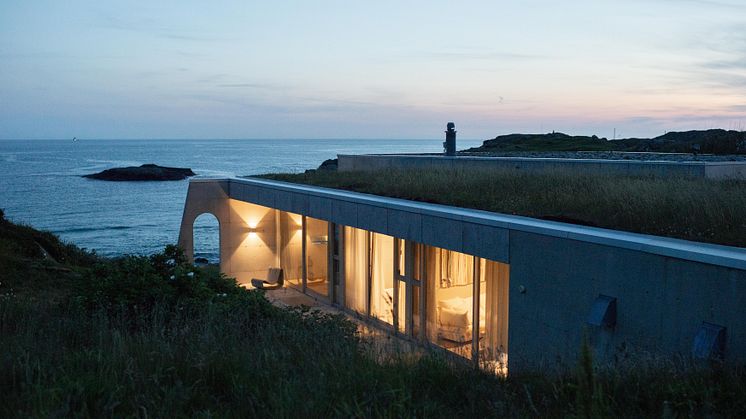
Nordic architecture has often been intently tied to its environment. Historically, builders in Norway, Sweden, Denmark, Finland, and Iceland relied on natural supplies like wood, stone, and clay to create homes that could endure severe climates. These possibilities ended up not simply useful but deeply cultural, embedding respect for nature and Group into style and design. Regular kinds—including turf-roof homes, log cabins, and coastal fishing huts—reflected a philosophy of simplicity, longevity, and harmony Along with the landscape. Let's check it out with me, Gus Woltmann.
The Increase of Sustainable Innovation
For that Nordic nations, sustainability isn't a stylish insert-on but a continuation of extended-standing cultural values that respect the purely natural earth. The area’s architecture has always emphasised sturdiness, resourcefulness, and efficiency, formed by necessity in climates where by winters are very long and sources were Traditionally scarce. In modern day times, as world wide conversations on local climate adjust and environmental responsibility intensified, Nordic architects The natural way located themselves for the forefront of sustainable innovation.
One of many hallmarks of the evolution is the embrace of energy-successful developing rules. Concepts like passive household style, which deal with minimizing Electricity consumption by insulation, airtight construction, and pure heat recovery, were being quickly adopted and tailored across the area. These techniques resonate with older traditions of conserving warmth and daylight but at the moment are executed with Sophisticated systems such as triple-glazed windows, clever energy programs, and photo voltaic integration.
A particularly notable craze is the revival and reinvention of wood being a Most important construction content. Traditionally, Wooden was abundant and broadly Employed in Nordic architecture, from log cabins to stave church buildings. Currently, innovations in cross-laminated timber (CLT) and various engineered wood items have permitted architects to assemble tall, modern, and fire-Risk-free properties with negligible carbon footprints. This not only decreases reliance on concrete and steel—both equally important resources of global emissions—but additionally reconnects communities with a fabric deeply rooted within their cultural identification.
Initiatives like Norway’s Powerhouse Brattørkaia, which provides more Power than it consumes in excess of its life time, or Sweden’s Sara Cultural Centre, among the list of tallest timber skyscrapers in the world, highlight how innovation and tradition merge. These projects are not just functional and sustainable but additionally aesthetically aligned With all the Nordic dedication to mild, openness, and simplicity.
Over and above resources and technological innovation, innovation in Nordic architecture also extends to urban layout. Metropolitan areas like Copenhagen and Helsinki are worldwide leaders in sustainable arranging, prioritizing pedestrian-pleasant layouts, integrated cycling infrastructure, and in depth public transit. These design conclusions cut down emissions, persuade Local community interaction, and help healthier existence—demonstrating that sustainability is just as much about social effectively-getting as it's about environmental responsibility.
To put it briefly, the increase of sustainable innovation in Nordic architecture is considerably less about a break from custom and more about a seamless continuation of it. By combining cultural heritage with cutting-edge systems, the Nordic design demonstrates how architecture may be both ahead-hunting and deeply respectful of its roots—environment a world illustration of how to construct to get a upcoming wherever human progress and ecological responsibility go hand in hand.
Legendary Examples
The philosophy of Nordic architecture is most effective recognized not only in theory but from the developed Areas that embody it. Over the region, architects have made iconic is effective that marry classic values of simplicity and respect for mother nature with reducing-edge strategies to sustainability. These structures stand as Actual physical testaments to how layout can serve both equally cultural identity and ecological accountability.
A single putting instance is The Oslo Opera Property in Norway, designed by Snøhetta. Its sloping, glacier-like framework invites the public to wander across its roof, breaking down limitations in between making and atmosphere. Produced with locally sourced resources such as marble and oak, the opera property also incorporates energy-productive units that minimize very long-term usage. It demonstrates the Nordic ethos of accessibility—an artwork Area that belongs not simply to elite audiences but to the broader Neighborhood.
In Sweden, the Sara Cultural Centre in Skellefteå signifies a revolution in product innovation. At 20 stories tall, it is without doubt one of the tallest timber buildings on this planet, crafted entirely from regionally harvested Wooden. Applying Sophisticated cross-laminated timber (CLT), the construction considerably cuts down the carbon footprint in contrast to traditional metal and concrete development. It's really a Daring statement that reimagines wood—not like a relic of tradition but as a contemporary Option to sustainable city dwelling.
Denmark offers An additional influential design Together with the CopenHill squander-to-Electricity plant in Copenhagen. Built by Bjarke Ingels Group (BIG), the facility not just transforms waste into thoroughly clean Strength for tens of Countless residences but will also doubles to be a leisure hub, showcasing a rooftop ski slope and climbing wall. This Mixing of utility, sustainability, and general public engagement is quintessentially Nordic, demonstrating that infrastructure alone can enrich Standard of living.
Iceland’s Harpa Live performance Corridor and Convention Centre in Reykjavik is an additional standout. Created in collaboration with artist Ólafur Elíasson, the glass façade is motivated by basalt rock formations, merging art, nature, and architecture. Past its visual brilliance, the building employs geothermal heating—a nod to Iceland’s abundant renewable resources—illustrating how custom and native Strength align seamlessly in present day layout.
These examples highlight a constant theme: Nordic architecture is not really about building monuments for admiration by itself but about crafting Areas that Dwell with their surroundings and improve community perfectly-staying. No matter if throughout the reinvention of wood, the transformation of squander into Electricity, or perhaps the democratization of cultural spaces, these jobs establish that architecture might be iconic not mainly because it imposes by itself, but since it harmonizes sustainability with human experience.
Group and Cultural Continuity
At the center of Nordic architecture lies greater than sustainability and innovation—it is actually about making spaces that maintain cultural identification and foster a strong feeling of Neighborhood. Compared with purely useful or commercial jobs, several Nordic designs intentionally reflect traditions, values, plus the each day rhythms of local lifetime. This cultural continuity ensures that even quite possibly the most forward-wondering structures keep on being grounded while in the social cloth of their environment.
One of many defining concepts is openness and inclusivity. Nordic societies value general public access to shared spaces, which is mirrored in architecture. Town squares, libraries, cultural facilities, and even key landmarks are often intended to be approachable and participatory rather than distinctive. For illustration, Norway’s Oslo Opera Residence was designed as much for folks to wander on and interact with as to accommodate performances. In this manner, architecture strengthens civic id whilst encouraging men and women to have interaction with art and tradition as Component of daily life.
Tradition also plays a task in shaping continuity. Nordic architects normally draw on vernacular kinds, elements, and spatial preparations that have been Portion of the area for hundreds of years. Picket structures, steep gables, and the integration of normal gentle are usually not merely aesthetic selections—they evoke a cultural memory of resilience in severe climates and also a regard for the landscape. Contemporary timber assignments like Sweden’s Sara Cultural Centre depict a continuation of such traditions, combining area materials with cutting-edge methods.
Sustainability itself is framed not only as an environmental obligation but as an extension of cultural duty. In nations like Iceland, in which geothermal Strength is central, or Denmark, with its emphasis on bicycle-helpful city layout, architecture embodies Local community values of harmony with character and collective properly-currently being. Structures are made not here simply to reduce affect but to symbolize continuity with cultural values that prioritize harmony amongst people and their atmosphere.
Furthermore, Nordic architecture nurtures social connection by creating multifunctional Areas where by persons Obviously Acquire. Local community centers double as overall performance venues; colleges function as hubs for night functions; and in some cases infrastructure tasks like Copenhagen’s CopenHill invite recreation alongside utility. These Areas blur boundaries amongst perform, Perform, and learning, reflecting a society the place Neighborhood cohesion is integral to Standard of living.
In the long run, Nordic architecture just isn't about preserving tradition for a static relic but about weaving it into the long run. By integrating cultural values into style, it makes certain that structures aren't isolated objects but dwelling areas of communities—continuing stories of resilience, inclusivity, and shared identification.
A Model for the longer term
Nordic architecture gives greater than regional inspiration—it happens to be a worldwide product for a way to equilibrium human demands, cultural values, and environmental responsibility. Within an era the place cities world wide are dealing with immediate urbanization, local weather challenges, and social fragmentation, the Nordic technique demonstrates that it is possible to innovate with no losing sight of tradition, Group, or ecological stewardship.
One of many most vital elements of this product is its holistic philosophy. Rather than dealing with architecture as a individual willpower focused only on aesthetics or engineering, Nordic design integrates sustainability, tradition, and social very well-becoming into every single phase of improvement. With the sourcing of renewable materials like timber, to Vitality-successful systems driven by wind or geothermal Electricity, to the creation of spaces that foster inclusivity and accessibility, the Nordic tactic is inherently interdisciplinary. This holistic perspective offers lessons for other nations having difficulties to reconcile advancement with sustainability.
Similarly essential would be the scalability of Nordic rules. Though iconic tasks for example Norway’s Oslo Opera Household or Denmark’s CopenHill attract global interest, the real power lies in the best way these Strategies permeate day to day Areas. Schools developed with plentiful organic gentle, household complexes that stimulate communal residing, and bicycle-helpful towns are not simply elite showcases—These are lived realities for everyday people today. This will make the Nordic product adaptable for communities worldwide, from developing city facilities to experienced megacities.
A different very important element could be the very long-expression frame of mind. Nordic international locations identify that architecture just isn't just for these days but for generations to come. Jobs are evaluated not simply on fast Value or visual appeal but also on longevity, environmental impression, and social worth more than decades. This ahead-contemplating viewpoint contrasts sharply with short-time period, financial gain-driven developments common in several portions of the entire world. By emphasizing longevity and resilience, Nordic architecture sets a standard for liable arranging inside the face of worldwide crises like local weather change.
In the long run, the Nordic design reminds us that architecture is about more than structures—it's about shaping how people Stay, connect, and prosper. It exhibits that design rooted in sustainability and lifestyle can produce towns that are not only successful but additionally humane, inclusive, and inspiring.
As the world queries for pathways to sustainable development, Nordic architecture stands as both equally a blueprint along with a beacon. It proves that natural beauty, tradition, and obligation can coexist—and that our designed atmosphere can function a bridge between heritage and also a sustainable long term.